Axiom MEV Protection: Off vs Reduced vs Secure Explained
Table of Contents
 MEV protection is the single setting on Axiom most likely to be left on a default that does not suit the trade, and the reporting on what that has cost Solana traders as a group is worse than most people realize.
Axiom offers three MEV modes: Off, Reduced ( Jito's bundle infrastructure), and Secure (whitelisted validators). Axiom's own docs recommend Secure. A sandwich works off the price impact of a buy, so the setting is aimed at the buy side.
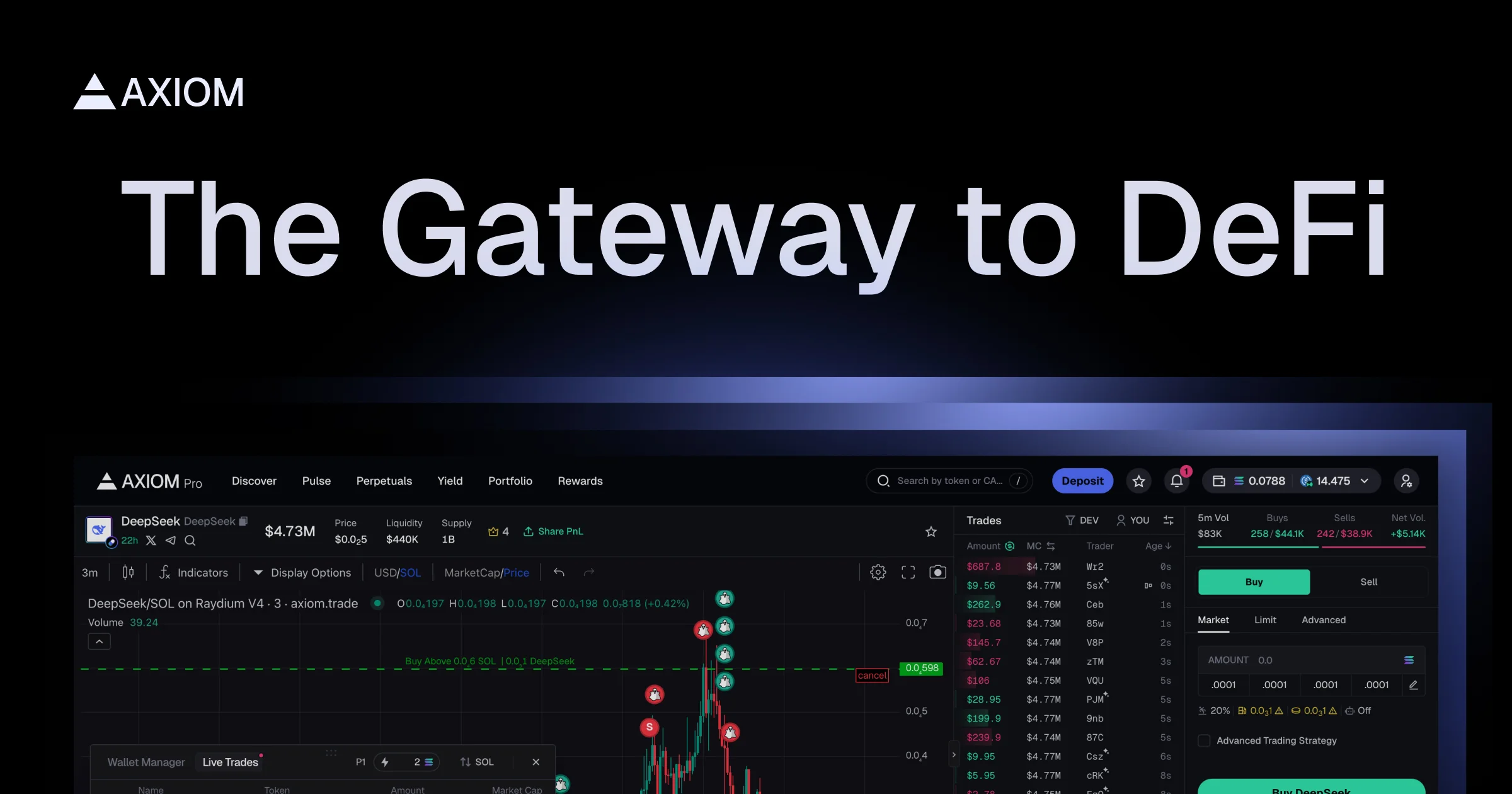
Source: Axiom, official product image
What a Sandwich Attack Actually Is
A sandwich attack works by placing one transaction immediately before yours and one immediately after. The first pushes the price up right before your buy executes, so you pay more than you should; the second sells into the price impact your own buy created, capturing the difference. The structure depends on your order moving the price in a direction the attacker can profit from, which is why the classic version targets buys. That is a description of the mechanism, not a promise that a sell can never be exploited by some other technique.
The Three Modes
Off. No protection. Your transaction goes through the standard path with no defense against front-running. Axiom presents this as the fastest option and the most exposed.
Reduced. Routes your transaction through Jito's bundle system. Jito is a separate company and that bundle infrastructure is Jito's, not Axiom's; Axiom's Reduced mode is a route into it. Axiom describes this as adding protection while staying relatively fast.
Secure. Routes exclusively through whitelisted validators. Axiom's documentation describes this as the slowest of the three, trading away access to the fastest general-purpose path for a validator set selected to resist sandwich construction, and recommends it.
The Real Cost of Getting This Wrong
Cryptopolitan reported on 22 October 2025, citing on-chain research credited to 0xGhostLogs, that wide sandwich attacks extracted roughly 529,000 SOL across an estimated 222,272 victims over a year, with a peak of 87,000 SOL in January 2025, and that around 70% of the extracted SOL came from users on  Solana's Axiom platform.
Two things about that figure are worth stating plainly. First, it is 70% of the SOL extracted, not 70% of the victims; the two are often conflated and they are not the same measurement. Second, the report does not establish a cause. Axiom's share of Solana terminal volume is a plausible part of it and traders leaving protection off is another, but neither the reporting nor this site can attribute the split, and none of it demonstrates that Axiom's infrastructure is uniquely vulnerable.
We link the reporting rather than the underlying analysis because we have not found a stable public URL for 0xGhostLogs' raw dataset. Where this figure appears elsewhere on this site, it carries the same attribution and the same caveat.
The same Cryptopolitan piece reports that the JitoSOL Blacklist Committee banned 15 further validators from receiving JitoSOL stake in response to that research. That is an action by Jito's committee on Jito's own staking product, and your own mode setting remains the more direct lever available to you.
When to Use Which Mode
| Situation | Recommended mode |
|---|---|
| Buying an established, liquid token (SOL, JUP, BONK) | Secure |
| Racing a fast-moving migration where every second matters | Reduced, accepting some exposure |
| Any sell | Less relevant, since the classic sandwich targets buys |
| Default, when unsure | Secure |
Tip
The honest tradeoff: Axiom describes Secure as costing you speed, while a sandwich on Off mode costs you money directly. Unless you're specifically racing a migration where being first matters more than the exposure, Secure is the better default.
This setting sits alongside your priority fee and Jito tip, both of which default to 0.001 SOL per Axiom's documentation, read August 2026, as the levers that determine execution quality on Axiom. See our full fee breakdown for how those interact, and how Pulse and Axiom's trading tools work for the rest of the execution layer.
Trade on Axiom
Sign up through our link and the 10% referral fee discount applies automatically to every trade.
Trade on AxiomFrequently Asked Questions
Three settings, chosen per trade: Off (no protection), Reduced (routes the transaction through Jito's bundle infrastructure, which is Jito's system rather than Axiom's), and Secure (whitelisted validators only). Axiom's own documentation recommends Secure.
Axiom's documentation describes Secure as routing exclusively through whitelisted validators rather than the fastest available path, and presents that as a speed tradeoff. We have not measured the difference and Axiom does not publish timings, so treat it as a documented tradeoff rather than a quantified one.
A sandwich profits from the price impact of a buy, by inserting one transaction before it and one after, so the protection is aimed at buys and Axiom's documentation frames it that way. That describes how the attack works rather than guaranteeing that no strategy could ever target a sell.
Cryptopolitan reported in October 2025, citing on-chain research from 0xGhostLogs, that around 70 percent of the SOL extracted by wide sandwich attacks over the prior year came from users on the Axiom platform. That reporting does not establish a cause. Axiom's share of Solana terminal volume is one plausible factor and MEV protection left off is another, but neither this site nor the report can say which mattered more.
Axiompedia is an independent educational resource. It is not affiliated with, produced by, reviewed by, endorsed by, or sponsored by Axiom Innovations Inc., the operator of axiom.trade, or any of its affiliates. "Axiom" and the Axiom logo are trademarks of Axiom Innovations Inc., used here only to identify the product this site writes about. Full disclaimer.
Disclaimer: Nothing on this site is legal, tax, financial or investment advice. Trading carries risk, including total loss. Whether any activity described here is permitted where you live, and how it is taxed, depends on your jurisdiction and your circumstances. Consult a qualified professional and the primary sources before acting. Past performance does not indicate future results. Always check the primary source and do your own research before trading. This site contains referral links, which are disclosed on the disclosure page.
Ready to Start Trading?
Sign up on Axiom through our link for a 10% discount on trading fees, applied automatically with referral code axiompe.
Save 10% on Fees